Gohesa Medical
Choosing the right support bandage is a clinical decision, not a simple preference. Elastic and non-elastic bandages behave differently under movement, swelling, and changing limb shape. Elastic materials provide sustained pressure, while non-elastic systems usually create lower resting pressure and higher working pressure during walking.
The need is substantial. The International Diabetes Federation’s Diabetes Atlas, 11th edition, reports that 589 million adults aged 20–79 lived with diabetes in 2024. Diabetes increases the risk of foot wounds, poor circulation, and delayed healing. The broader wound-care industry continues to expand, according to recent market analyses from Grand View Research and Fortune Business Insights. Yet market growth does not make selection easier. The wrong compression level may cause pain, slippage, skin damage, or reduced circulation.
So, How to choose between elastic and non-elastic support bandages? Begin with the purpose. Elastic bandages may suit ongoing support, mild swelling, or areas requiring flexible movement. Non-elastic bandages can be useful when clinicians need firmer control during activity and gentler pressure at rest. NICE guideline NG152 recommends vascular assessment before compression for venous leg ulcers, while the International Compression Club warns that arterial disease requires careful evaluation. Measure first.
Fit matters greatly.
A bandage should feel supportive, not numb or painfully tight. Check the toes, skin color, temperature, and swelling after application. A trained professional should guide use when circulation is uncertain, wounds are present, or swelling changes quickly. This guide cannot replace assessment. The boundary between “comfortable” and “too tight” is sometimes surprisingly narrow.
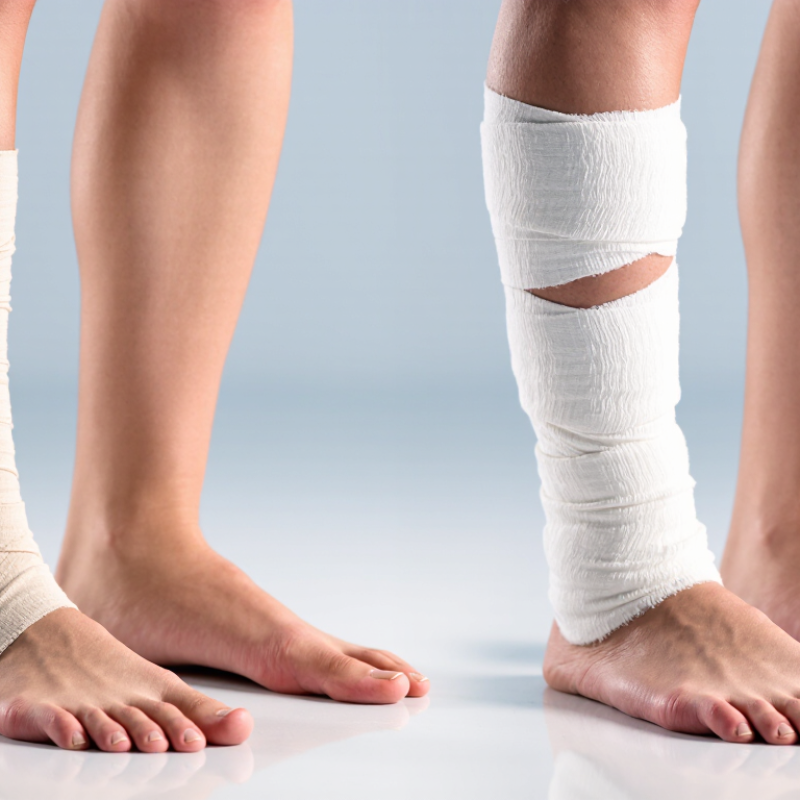
Elastic and non-elastic bandages differ mainly in stretch and pressure behavior. Elastic bandages extend when wrapped and return toward their original length. This creates sustained pressure during rest and movement. Their pressure depends on stretch, layer count, limb shape, and application skill. A small change in tension can alter comfort significantly.
Non-elastic bandages have little permanent stretch. They usually provide lower resting pressure but stronger working pressure when muscles contract. This makes them useful for supporting movement and managing certain types of swelling. Their firm structure can resist changes in limb volume. However, poor application may create pressure gaps or uncomfortable edges.
Choose by the pressure profile, not appearance alone. Elastic materials may suit situations requiring continuous support, especially when regular movement is limited. Non-elastic materials may be preferable when walking produces useful muscle-pump action. Skin condition, circulation, sensation, swelling pattern, and mobility must also guide selection. A trained healthcare professional should assess these factors before use.
A practical check matters. The bandage should feel secure, not numb or sharply painful. Toes or fingers should remain warm and normally colored. Pressure readings can help, but they are not the whole answer. The boundary between “elastic” and “non-elastic” is not always perfect. Some products have mixed behavior, and real-world wrapping rarely matches laboratory conditions. That is where careful reassessment becomes essential.
Elastic bandages are often chosen when compression must continue during movement. Their stretch stores tension, then releases it as the limb changes shape. A practical target near 20–40 mmHg can provide moderate, sustained compression at the ankle when applied correctly. Pressure is not fixed, however. It changes with bandage width, overlap, limb circumference, and application skill. That detail is easy to underestimate.
The International Consensus Statement on Medical Compression Treatment, published in Phlebology in 2020, stresses that pressure should be matched to vascular status and patient tolerance. It also warns that excessive or uneven compression can cause pain, skin damage, or circulation problems. Cochrane’s review of compression for venous leg ulcers found that compression generally improves healing compared with no compression, although the best pressure system varies between patients. These findings support measurement, not guesswork.
In practice, an elastic bandage should feel firm, not sharply tight. The toes should remain warm and normally colored. Wrinkles behind the ankle deserve correction. Nonelastic bandages may offer lower resting pressure and higher working pressure, while elastic materials maintain more consistent tension during rest. Still, “sustained” does not mean “automatically safe.” I would recheck the wrap after walking, because the first application can look perfect and perform poorly. Reports provide useful ranges, but real limbs rarely behave like textbook cylinders.
Non-elastic bandages are designed for low resting and high working compression. They feel relatively comfortable when the patient is lying still. During walking, calf muscles expand against the firm bandage, creating higher pressure around the ankle and calf. This action can support venous return without excessive night-time pressure.
The 2021 Cochrane review on compression for venous leg ulcers included 39 trials and more than 4,300 participants. It found that compression generally improves healing compared with no compression, although results varied between systems. Wounds UK guidance also stresses vascular assessment before compression. Measure the ankle-brachial pressure index, inspect skin colour, and check sensation. Small errors matter.
A practical fitting check is simple. The bandage should remain secure while the patient walks. Toes should stay warm and normally coloured. Pain, numbness, or increasing swelling requires reassessment. Experienced clinicians know that “low resting” does not mean risk-free. Poor padding can create pressure peaks over the ankle, shin, or wound edge. The evidence supports compression, but not careless application. In real practice, patient movement, limb shape, and wrapping skill can change the pressure substantially.
Choosing elastic or non-elastic bandages should begin with an ankle-brachial index (ABI), not guesswork. The 2024 AHA/ACC Peripheral Artery Disease Guideline classifies ABI values below 0.90 as abnormal. Values from 1.00 to 1.40 are generally considered normal, while readings above 1.40 may indicate stiff, poorly compressible arteries. Compression can become dangerous when arterial flow is severely reduced.
An ABI below 0.5 deserves specialist guidance before applying compression. Pause first. Some wound-care protocols also advise caution below 0.6, especially when ankle pressure is below 60 mmHg. Elastic bandages maintain continuous pressure and may increase risk when arterial supply is limited. Non-elastic systems usually create lower resting pressure, but they are not automatically safe. A trained clinician should check pulses, skin temperature, pain, capillary refill, and wound appearance.
In practice, a cool foot, pale toes, or increasing pain after wrapping requires immediate reassessment. Diabetes and arterial calcification can produce misleading ABI results, so toe-brachial pressure or Doppler testing may be needed. The International Consensus Statement on risks of medical compression recommends vascular assessment before treatment in suspected peripheral arterial disease. One measurement is not the whole patient. That is where practice can become imperfect: pressure, limb shape, swelling, and bandaging technique all change the result. Choose the material only after reviewing the full vascular picture.
An ankle-brachial index (ABI) below 0.5 indicates severe peripheral arterial disease risk. Seek specialist guidance before applying compression. Modified compression may be considered for ABI 0.5–0.8, while standard compression is generally considered only when ABI is above 0.8 and other contraindications have been excluded.
The chart shows commonly used ABI interpretation bands and related compression precautions. ABI is not the only decision factor; symptoms, pulses, skin condition, diabetes, edema, and clinician assessment must also be considered.
Choosing elastic or non-elastic bandages starts with the wound, not the package. Observe drainage, skin condition, swelling, and circulation. For moderate or heavy exudate, use a suitable absorbent primary dressing before compression. Elastic bandages stretch during movement and maintain pressure. They may suit active limbs with changing circumference. Non-elastic bandages provide firmer support with less stretch. They can help when controlled, consistent pressure matters. Fit matters.
Mobility changes the decision. An ankle that bends often may tolerate elastic layers better. A relatively still limb may accept non-elastic support more comfortably. Yet a loose wrap can slide, fold, or create pressure points. Check toes and fingers for color, warmth, sensation, and increasing pain. Remove the bandage and seek clinical advice if circulation appears impaired. This is practical, not perfect. Real bodies vary. Reuse a bandage only when its instructions allow it. Wash it correctly, then inspect the fibers, edges, and elasticity. Discard damaged or contaminated material.
Two-layer systems may feel lighter and cooler. Three- or four-layer systems can manage heavier exudate and uneven limb shapes. However, extra layers increase heat, bulk, and application difficulty. Each layer should remain smooth, secure, and free from tight ridges. A trained clinician should reassess compression when swelling changes or skin is fragile. I would not choose four layers simply because they sound stronger. Exudate, mobility, reusability, and regular monitoring should guide the adjustment.
Elastic bandages stretch and maintain pressure during rest and movement. Non-elastic bandages stretch little and create stronger pressure during muscle activity.
It may suit people needing continuous support, especially when movement is limited. Small tension changes can greatly affect comfort.
It may help when walking activates the calf muscle pump. Resting pressure is often lower, but working pressure becomes higher.
It should feel secure, not numb or sharply painful. Toes or fingers should stay warm and normally coloured. Recheck it.
Yes. Poor padding can create pressure peaks near the ankle, shin, or wound edge. Firm does not mean risk-free.
A clinician should assess circulation, skin condition, sensation, swelling, and mobility. An ankle-brachial index may guide decisions.
An ABI below 0.5 requires specialist guidance before compression. Some protocols advise caution below 0.6 or with low ankle pressure.
Cool feet, pale toes, increasing pain, numbness, or swelling require prompt reassessment. Do not simply tighten the bandage.
No. Diabetes and stiff arteries can produce misleading results. Toe pressure or Doppler testing may be needed.
No. Pressure readings help, but limb shape, swelling, movement, and wrapping skill also change real-world results. Practice is imperfect.
How to choose between elastic and non-elastic support bandages depends on how much stretch, pressure, and control a wound or limb requires. Elastic bandages provide sustained compression, typically around 20–40 mmHg, and can adapt to movement while maintaining pressure over time. They may suit situations requiring continuous support, but the correct level should be selected carefully to avoid excessive compression.
Non-elastic bandages offer low resting pressure and higher working compression, making them useful when muscle movement can help activate compression. Selection should also consider wound exudate, mobility, comfort, reusability, and whether a two- to four-layer system is appropriate. Before applying compression, review the patient’s ankle-brachial index (ABI). If the ABI is below 0.5, specialist guidance is essential because strong compression may be unsafe. Proper assessment and fitting help balance therapeutic pressure with circulation, mobility, and skin protection.
