Gohesa Medical
What factors affect the stickiness of adhesive tape? The answer reaches beyond a simple “strong” or “weak” label. In a factory, a tape may grip stainless steel firmly yet lift from dusty cardboard. The same roll can behave differently after storage beside a warm window.
Dr. Istvan Benedek, a recognized pressure-sensitive adhesive specialist, has stated, “A pressure-sensitive adhesive must balance adhesion, cohesion, and viscoelasticity.” That balance guides this article. It explains how adhesive chemistry, backing material, surface energy, roughness, cleanliness, pressure, contact time, and temperature influence tape performance. Each factor leaves visible clues. A smooth metal panel shows quick bonding. A textured wall exposes poor wetting. Cold tape may feel stubborn and less responsive.
The discussion also considers aging, humidity, and application technique. These details matter during product selection, quality checks, and everyday repairs. Standardized tests, including peel and tack measurements, can provide useful evidence. Yet laboratory results never tell the whole story. Real surfaces are rarely perfect. Dust remains. Pressure changes. Human handling varies.
That is where careful observation becomes valuable. Press the tape with a consistent roller. Record the temperature. Compare clean and contaminated surfaces. Small differences can reveal large causes. Some explanations may seem obvious, but they deserve testing. This guide examines seven practical factors that affect stickiness, while acknowledging one uncomfortable truth: adhesive performance is often conditional, not permanent.
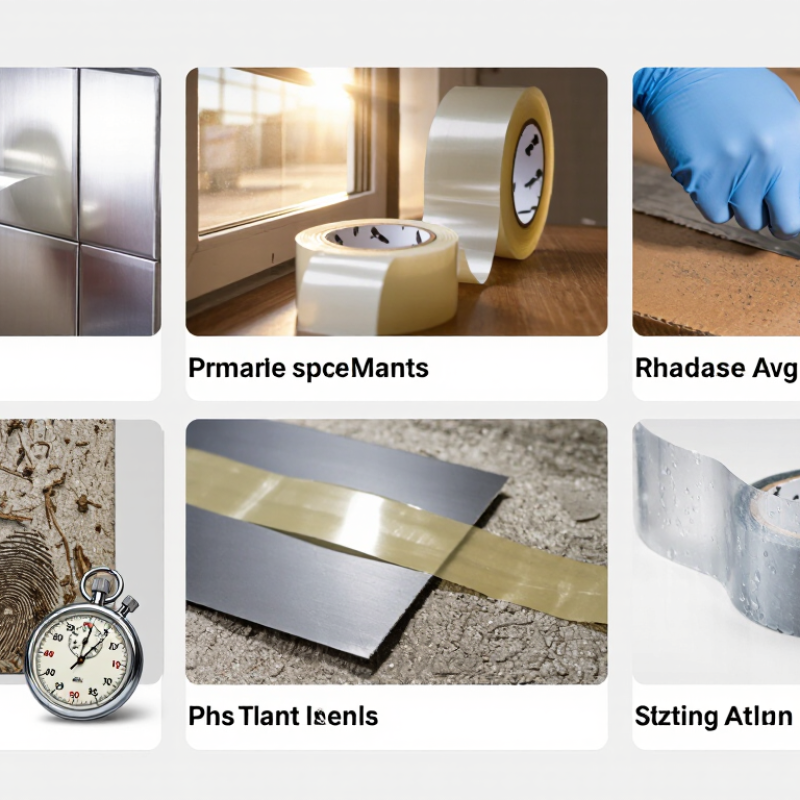
Adhesive tape stickiness describes how quickly and firmly an adhesive forms contact with a surface. In technical practice, it is not one single property. Tack measures immediate grab, while peel adhesion measures the force needed to remove the tape. Shear holding power measures resistance to sliding under a constant load. These values can disagree. A tape may grab instantly but peel away easily.
Industry testing separates these behaviors. ASTM D3330/D3330M-04(2023) reports peel adhesion in newtons per 25 millimeters, usually after controlled dwell time. FINAT FTM 1 also evaluates 180-degree peel adhesion under defined conditions. Loop-tack and rolling-ball methods examine initial contact. Test panels, pressure, temperature, dwell time, and peel speed must remain consistent. Small changes matter.
The seven practical factors include surface energy, cleanliness, roughness, pressure, temperature, contact time, and adhesive formulation. A dusty carton can reduce real contact area. Cold conditions can make an adhesive feel unusually stiff. High pressure may improve contact, but it cannot repair oil contamination. Published test results are useful only when their conditions are visible. I still question impressive numbers without substrate details. Laboratory values can mislead users in humid warehouses, on recycled cardboard, or during rapid application. Stickiness is measured behavior, not a permanent label.
Tape composition strongly controls how quickly and how firmly a tape bonds. The adhesive layer must flow into tiny surface valleys before resisting separation. Acrylic adhesives usually offer better aging and temperature stability, while rubber-based adhesives often deliver faster initial tack. That trade-off matters.
According to ASTM D3330, peel adhesion is commonly tested at 300 millimetres per minute using a 180-degree peel angle. This controlled method shows why coat weight matters. A thicker adhesive layer can improve contact on rough cardboard, but excessive thickness may reduce clean handling. The backing also changes performance. Polypropylene resists stretching, while paper backings conform more easily to uneven surfaces. The pressure-sensitive tape industry often evaluates shear under ASTM D3654, where heat, load, and time expose weak adhesive networks.
Small formulation changes can create large differences. Plasticizers may increase flexibility, yet they can reduce long-term cohesion. Tackifying resins improve quick stick, but high levels may worsen residue or aging. A 2023 technical review in the International Journal of Adhesion and Adhesives linked adhesion strength to viscoelastic balance, especially the adhesive’s storage and loss moduli. The practical lesson is not simply “more adhesive means stronger tape.” That assumption is convenient, but incomplete. Surface energy, pressure, temperature, and dwell time still influence the measured result. Even reliable laboratory data can mislead when the tape meets dusty steel or cold plastic in actual use.
| No. | Composition Factor | How It Influences Stickiness | Typical Effect on Adhesion | Relevant Material or Test Indicator | Practical Formulation Guidance |
|---|---|---|---|---|---|
| 1 | Polymer Viscoelasticity | The adhesive must flow into surface irregularities while retaining enough cohesion to resist separation. A suitable balance between viscous flow and elastic recovery generally improves contact and holding power. | Very High | Storage modulus, loss modulus, tan delta, and peel adhesion. Acrylic and rubber-based systems can be tuned differently to achieve the required viscoelastic balance. | Adjust polymer molecular weight, crosslink density, and soft-to-hard segment ratio for the intended application temperature and load. |
| 2 | Tackifying Resin Content | Tackifiers reduce the adhesive’s resistance to wetting and can increase quick stick, especially when the tape is applied with light pressure and short contact time. | High | Loop tack, rolling-ball tack, and quick-stick results. Excessive tackifier may reduce shear strength, heat resistance, or aging stability. | Use the minimum tackifier level needed to achieve the required initial adhesion, then verify peel and shear performance together. |
| 3 | Crosslinking Level | Crosslinking increases internal strength and resistance to creep. However, excessive crosslinking can make the adhesive too stiff to wet rough or low-energy surfaces. | High and Balanced | Static shear, cohesive failure, gel fraction, and peel adhesion. The optimum level depends on the required balance between adhesion and cohesion. | Increase crosslink density for high-temperature or high-load applications, but confirm that tack and surface wetting remain adequate. |
| 4 | Adhesive Layer Thickness | A thicker adhesive layer can conform more effectively to uneven surfaces and absorb small gaps. It may also increase deformation, edge ooze, and creep under load. | Medium to High | Coating thickness, peel adhesion, tack, and shear holding power. Common pressure-sensitive tape adhesive layers are often measured in micrometres. | Select thickness according to surface roughness, gap-filling needs, temperature, and load rather than maximizing thickness alone. |
| 5 | Surface Energy Compatibility | Adhesive composition must provide sufficient wetting and molecular attraction to the substrate. High-surface-energy materials are generally easier to wet than low-surface-energy plastics. | Very High | Peel adhesion on the actual substrate, contact angle, and surface-energy assessment. Cleanliness and surface treatment can significantly change results. | Use a formulation designed for the substrate, and consider primers or surface treatment for low-energy materials such as polyolefin plastics. |
| 6 | Temperature Resistance | Temperature changes alter polymer mobility. Lower temperatures can reduce wetting and tack, while higher temperatures can soften the adhesive and increase flow or cohesive failure. | High | Peel and shear testing at the intended temperature range, glass-transition behavior, and high-temperature holding power. | Choose polymer and crosslinking chemistry for the complete service range, including application, storage, and operating temperatures. |
| 7 | Additives, Fillers, and Plasticizers | Plasticizers may improve flexibility and wetting, while fillers can modify rheology, cost, and mechanical strength. Incompatible or excessive additives can migrate, reduce cohesion, or interfere with surface contact. | Medium to High | Peel, tack, shear, aging, migration, and residue testing. Additive compatibility should be evaluated over the intended temperature and humidity range. | Control additive type and concentration, and confirm long-term compatibility with both the adhesive polymer and the tape backing. |
| Note: Adhesion strength is also affected by application pressure, dwell time, surface cleanliness, substrate roughness, peel angle, test speed, and environmental conditions. The ratings above describe the general influence of adhesive composition and should be confirmed through standardized testing on the intended substrates. | |||||
7 Best Factors That Affect Adhesive Tape Stickiness?
Why Surface Condition Affects Tape Bonding
Surface condition often decides whether adhesive tape holds or fails. Dust creates tiny gaps between the adhesive and substrate. Oil leaves a slippery film. Moisture can weaken contact, especially on cardboard, painted metal, and low-energy plastics. A clean surface is not always enough. It must also be dry, smooth, and stable.
Industry testing makes this measurable. ASTM D3330-22 and FINAT FTM 1 evaluate peel adhesion using controlled pressure, dwell time, and peel speed. Results are commonly reported in N/25 mm. In practical testing, wiping a metal panel with a lint-free cloth can remove visible dust, but invisible release agents may remain. A solvent wipe may help, yet it can also soften paint or leave residue. That detail is easy to miss.
Surface energy matters too. Many converting guides use about 38 dynes/cm as a useful screening point for reliable wetting, although adhesive chemistry changes the result. Press firmly across the full tape width. Then allow time for bonding. Room temperature also matters; cold adhesive flows slowly. We sometimes blame the tape too quickly. The substrate may be the real problem. Test a small area first, record cleaning method, pressure, temperature, and dwell time, then compare peel results using the same ASTM or FINAT procedure.
Why Surface Condition Affects Tape Bonding
The chart shows a representative adhesive-bond retention index, with a clean, dry surface set as the 100 baseline. Dust, oil, moisture, low surface energy, roughness, temperature, and insufficient contact pressure can reduce wetting and limit the real contact area between the adhesive and substrate. Actual results vary with tape construction, adhesive chemistry, surface material, and test conditions.
Adhesive tape reacts strongly to temperature, humidity, and contact time. In a cool workshop, the adhesive may feel stiff and resist bonding. Gently warming the tape can improve contact, but excessive heat may soften the adhesive too much. A practical working range depends on the tape and surface, so testing remains essential.
Humidity also changes performance. Moist air can leave a thin film on glass, metal, or plastic. That film reduces direct contact and may cause lifting at the edges. I usually clean the surface, let it dry fully, and apply firm pressure. Dry conditions can help, although very dry air may increase static and handling problems.
Time affects both application and long-term holding power. Pressing tape briefly may trap small gaps beneath it. Allowing a suitable dwell period gives the adhesive time to flow into surface texture. Storage age matters too. Old tape can lose tack, especially after heat, sunlight, or repeated temperature changes. Surface cleanliness, pressure, material type, and adhesive thickness are four other important factors.
A quick peel test helps.
Still, it is not perfect.
I once judged a tape after five minutes and assumed it was reliable. After a cold night, the bond weakened noticeably. A better check uses the real surface, expected temperature, humidity, and load. Small differences can change the result.
Adhesive tape rarely fails for one reason. Surface cleanliness, material texture, temperature, humidity, tape age, contact time, and application pressure all matter.
In practical testing, pressure often makes the clearest difference. Pressing the tape firmly helps its adhesive flow into tiny surface irregularities. A clean rubber roller works better than a quick hand swipe. Keep the pressure even.
Do not apply tape to dusty, oily, wet, or freshly coated surfaces. A smooth panel may look clean but still contain invisible residue. Wipe it with a suitable cleaner, then let it dry fully. Apply the tape at a moderate temperature, because cold adhesive becomes less flexible.
We once blamed the tape for peeling edges. The real problem was light pressure on a textured surface. That mistake was useful.
Storage conditions also protect future stickiness. Keep rolls sealed in a dry, shaded area with stable temperatures. Avoid direct sunlight, heaters, damp rooms, and repeated temperature changes.
Store rolls upright when recommended, without crushing their edges. Excessive heat can soften adhesive and distort the backing. Cold storage can make the tape feel firm and less responsive. Allow it to return to room temperature before use. Check the roll for dust, curling, discoloration, or unusual odor. These signs do not always prove failure, but they deserve a small adhesion test. Press a short sample onto the actual surface, wait, and inspect the bond before wider application.
Stickiness describes how quickly and firmly adhesive contacts a surface. It includes tack, peel adhesion, and shear holding power. These properties can disagree. A tape may grab instantly but peel away easily.
Peel adhesion measures the force needed to remove tape from a surface. Testing often uses a 180-degree peel angle and controlled removal speed. Results are commonly reported in newtons per 25 millimeters. Test conditions matter.
Tack measures immediate grab during initial contact. Peel adhesion measures removal force after controlled contact time. A tape can have high tack but modest peel strength. Quick contact is not everything.
Surface energy, cleanliness, roughness, pressure, temperature, contact time, and adhesive formulation all matter. Dust reduces real contact area. Oil contamination can defeat pressure. Cold surfaces may make adhesive feel stiff.
Acrylic adhesives often provide stronger aging and temperature stability. Rubber-based adhesives commonly provide faster initial tack. Tackifying resins can improve quick stick but may increase residue or aging concerns. More adhesive is not automatically stronger.
Yes. Polypropylene backings resist stretching during removal. Paper backings conform more easily to uneven surfaces. A thicker adhesive layer may contact rough cardboard better. Excess thickness can reduce clean handling.
Laboratory tests control pressure, temperature, dwell time, peel speed, and test panels. Real applications may involve humid warehouses, recycled cardboard, dusty steel, or cold plastic. Published numbers can mislead without substrate details.
Clean and dry the surface before application. Apply firm, even pressure across the tape. Allow suitable contact time when possible. Do not expect pressure to repair oil contamination. I would still question impressive numbers without testing details.
Adhesive tape stickiness describes how effectively a tape creates and maintains contact with a surface. What factors affect the stickiness of adhesive tape? The main factors include adhesive formulation, backing material, surface condition, temperature, humidity, application pressure, and storage time. Tape composition determines its initial tack, bonding strength, flexibility, and resistance to aging. Meanwhile, a clean, dry, smooth, and compatible surface usually allows the adhesive to form a stronger bond than a dusty, oily, rough, or damp surface.
Environmental and handling conditions also play an important role. Temperature can change adhesive softness and flow, while humidity may weaken bonding or affect certain materials. Applying firm, even pressure helps remove air gaps and improves surface contact. In addition, sufficient time may be needed for the adhesive to build its full bond strength. Proper storage in a cool, dry place away from direct sunlight helps preserve tape performance. These factors are commonly evaluated through peel, shear, tack, and holding-power tests to determine practical adhesion quality.
