Gohesa Medical
Muscle soreness after a workout can make stairs feel unusually steep. A soft elastic bandage may offer gentle compression and a sense of support, but it does not repair muscle tissue or guarantee faster recovery. Ordinary delayed-onset soreness often improves with time, light movement, hydration, and rest. A sudden sharp pain, marked swelling, bruising, weakness, or trouble using a limb may point to an injury instead.
This guide explores practical, cautious ways to use bandaging after exercise. It explains how to choose a suitable wrap, where to place it, and how snug it should feel. The phrase “How to use bandage for post-exercise muscle soreness” sounds simple, yet the details matter. A wrap that feels reassuring at first can become too tight as swelling changes. Tingling, numbness, color changes, or increasing pain are reasons to loosen or remove it. Small signs matter.
The ten suggestions that follow focus on comfort and safe use, not on treating every ache with compression. Bandages are not necessary for routine soreness, and they should not replace medical assessment when symptoms are severe or unusual. There is no single wrap that suits every body part or workout. Even a neat-looking bandage can be unhelpful. Take a moment to check how the area feels, and be willing to adjust your approach.
Delayed-onset muscle soreness (DOMS) usually follows unfamiliar or intense exercise, especially movements that lengthen muscles under load. It often starts 12–24 hours later and peaks between 24 and 72 hours, according to the American College of Sports Medicine’s guidance on muscle cramps and soreness. The ache may feel broad and tender, such as soreness across both thighs after downhill running. It generally eases over several days. Not every sore muscle is harmless, though.
A bandage is unlikely to fix ordinary DOMS. Compression may offer modest comfort, but research reviews on compression garments report mixed effects on soreness and recovery; results do not prove that a simple elastic wrap speeds muscle healing. Use a wrap only for mild, localized swelling or support, and keep it snug, not tight. Check your skin and circulation. Loosen it if you notice numbness, tingling, coldness, or color changes. If pain is sharp, swelling is substantial, movement is limited, or symptoms worsen, seek medical advice rather than wrapping through it. Severe weakness or dark urine after strenuous exercise needs urgent care. That distinction can be easy to miss when soreness appears after a hard session. I’d be cautious about calling every ache “just DOMS.”
Choosing a compression bandage for a sore muscle starts with the body area. A wide elastic wrap usually sits more evenly on a thigh or calf, while a narrower one is easier to control around an arm. Choose a length that allows a few overlapping turns without stretching the material to its limit. The bandage should feel supportive, not tight. Fit matters more.
Wrap over clean, dry skin, smoothing wrinkles as you go. Keep the pressure even, and leave fingers or toes visible when wrapping a nearby limb so you can check their color and warmth. Recheck the area after a few minutes. Remove the wrap promptly if you notice tingling, numbness, increasing pain, cool skin, or color changes. Less is safer.
Compression may feel comforting, but it does not repair a strained muscle or guarantee faster recovery. I would avoid sleeping in a snug wrap unless a clinician specifically advises it; swelling and pressure can change over time. For mild soreness, gentle movement and rest from painful exercise may also help. I have found it easy to pull an elastic wrap too firmly, especially around joints, so loosen it if you are unsure. Seek medical advice for severe pain, marked swelling, weakness, or symptoms that do not improve.
Typical elastic bandage width ranges by body area (inches)
These are common size ranges, not medical rules. Choose a width that covers the area smoothly without bunching, and follow the product instructions. Compression should feel supportive, not tight; loosen or remove the wrap if you notice numbness, tingling, increased pain, or skin color changes.
Before bandaging a sore muscle, wash your hands and gently clean the skin with soap and water. Dry it fully, including skin folds, so the wrap is less likely to slip. Check for cuts, rash, swelling, or unusual warmth. Do not cover irritated or broken skin; seek medical advice if pain is severe or worsening. A small detail matters: lotion can make a wrap slide, though I sometimes forget that.
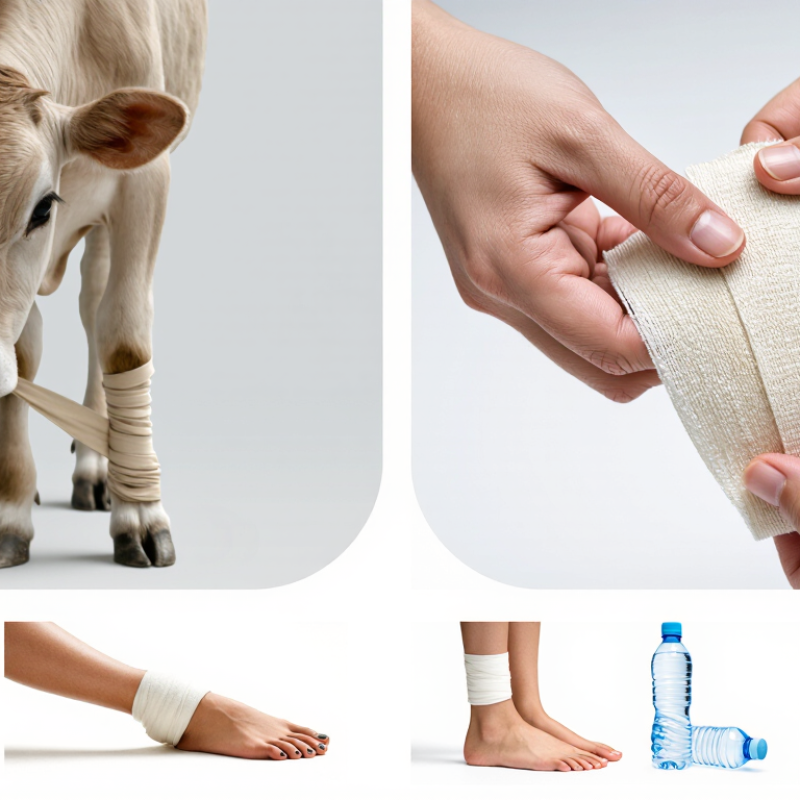
Position the area in a relaxed, comfortable posture before applying the bandage. For a sore calf, sit with your leg supported and your ankle resting naturally, rather than pointed hard. Wrap smoothly from below the sore area upward, overlapping each layer without pulling sharply. The wrap should feel supportive, not restrictive.
Leave fingers or toes visible when possible, and check their color, warmth, and sensation afterward. Loosen the bandage if you notice numbness, tingling, increasing pain, or cool skin.
Tips: Keep the skin dry, avoid creases, and recheck the fit after moving around. Don’t wrap more tightly just because soreness remains; compression is not a measure of healing. If the position feels awkward, pause and adjust before continuing. Small adjustments help.
A bandage should feel supportive, not tight. Wrap it around the sore area with steady, gentle pressure, overlapping each turn by about half the bandage’s width. Keep the limb relaxed and avoid pulling hard; uneven tension can create uncomfortable pressure points. Leave fingers or toes visible when possible, so you can check circulation. Skin should stay its usual color and temperature. If you notice tingling, numbness, increasing pain, or cold or discolored skin, loosen or remove the wrap promptly.
Compression may ease discomfort for some people, but it does not repair a muscle strain or guarantee faster recovery. A systematic review in the Journal of Strength and Conditioning Research examined controlled studies of compression garments and found modest improvements in perceived muscle soreness and recovery measures. Those findings concern garments, however, and should not be treated as proof that a tightly wrapped bandage works better. Use a light, removable wrap, and check the skin after a few minutes. It is easy to wrap too firmly when sore.
For a mild ache, keep the bandage smooth and avoid covering an open wound or a visibly swollen, hot area without medical advice. Remove it before sleeping unless a clinician has advised otherwise. Stop exercising if pain worsens, and seek medical care for severe pain, marked swelling, weakness, or symptoms that do not improve. A wrap is only support. It is not a diagnosis.
A light elastic wrap may offer support around a sore calf or forearm, but it should never feel like a clamp. Keep fingers or toes beyond the wrap uncovered. Check them after applying it, then again after ten minutes. They should stay warm and normally colored. Press a toenail or fingernail until it pales; color should return within about two seconds. This check is imperfect, especially in cold weather, so pay attention to how the limb feels too.
Loosen or remove the bandage promptly if you notice tingling, numbness, increasing pain, unusual coolness, swelling below the wrap, or pale or bluish skin. Don’t wait it out. Rewrap more loosely only if symptoms fully settle; otherwise, leave it off and seek medical advice. Remove the wrap before sleep unless a health professional has specifically advised otherwise, and inspect the skin for marks or irritation. A bandage can ease the feeling of support, but it does not repair a muscle or guarantee faster recovery. If soreness is severe, worsening, or accompanied by major bruising or weakness, get assessed. I sometimes find it easy to tighten a wrap without noticing, which is exactly why a second circulation check matters.
A wider wrap usually sits more evenly on a thigh or calf. A narrower one is easier to control around an arm. Fit matters more than force.
Wash your hands and clean the skin with soap and water. Dry it fully, including any skin folds. Avoid lotion; it can make the wrap slide. I sometimes forget that.
Sit comfortably with your leg supported and ankle resting naturally. Wrap smoothly from below the sore area upward, overlapping each layer without pulling sharply. Pause if it feels awkward.
It should feel supportive, not restrictive. Keep pressure even and smooth out wrinkles. Don’t tighten it just because soreness remains. Less is safer.
Leave your toes or fingers visible. Check their color, warmth, and sensation after wrapping and again about ten minutes later. Press a nail until it pales; color usually returns within about two seconds. This check is imperfect, especially in cold weather.
Remove it promptly for tingling, numbness, increasing pain, cool skin, swelling below the wrap, or pale or bluish skin. Don’t wait it out. If symptoms do not fully settle, leave it off and seek medical advice.
Remove a snug wrap before sleep unless a health professional specifically advises otherwise. Pressure and swelling can change over time. A second check helps.
A wrap may feel supportive, but it does not repair a muscle or guarantee faster recovery. Gentle movement and rest from painful exercise may help mild soreness. Seek medical advice for severe pain, marked swelling, weakness, or symptoms that do not improve.
Post-exercise muscle soreness can sometimes benefit from gentle compression, especially when a muscle feels mildly swollen or tender. A bandage is not a cure for soreness and should not be used to mask a serious injury. How to use bandage for post-exercise muscle soreness begins with choosing a clean, flexible compression bandage that is wide enough to cover the area comfortably. Before applying it, make sure the skin is clean and dry, remove anything that could press against the skin, and position the affected muscle in a relaxed, natural posture.
Wrap the bandage evenly, starting below the sore area and moving upward, with each layer overlapping the previous one. Use light, steady pressure rather than pulling tightly, and leave the ends of fingers or toes exposed when possible so circulation can be checked. The bandage should feel supportive, not painful or restrictive. Loosen or remove it right away if numbness, tingling, increasing pain, unusual swelling, or color changes occur. Remove the wrap for rest and skin checks, and seek medical advice if symptoms are severe, worsen, or do not improve.
