Gohesa Medical
Medical-grade tape is not judged by appearance alone. Adhesion, skin contact, sterilization, packaging, and traceability all influence its safety and market access. For manufacturers in China, the question is practical: What certifications are required for medical-grade tape products?
The answer depends on intended use, risk classification, product claims, and destination market. ISO 13485 certification supports a controlled medical-device quality system. Biocompatibility evidence may require ISO 10993 testing, especially for tapes touching damaged skin. Sterile products also need validated sterilization and packaging processes. China-bound products may require NMPA registration or filing, while exports can involve FDA requirements, EU MDR compliance, or other national rules.
W. Edwards Deming, a leading quality-management expert, wrote, “Quality comes not from inspection, but from the improvement of the production process.” This principle remains highly relevant. A certificate alone cannot prove consistent adhesive performance. Batch records, peel-strength testing, aging studies, clean production controls, and complaint handling complete the evidence.
Details matter.
This overview will examine ten commonly requested certification areas for Chinese medical tape suppliers. It will distinguish mandatory approvals from useful supporting standards. That distinction is often misunderstood. A supplier may hold ISO 13485 certification but still lack product-specific authorization. Another may provide test reports without demonstrating stable production controls.
Requirements can change with claims and markets. Therefore, this introduction is a practical starting point, not a substitute for regulatory review. Buyers should verify current rules with qualified authorities, accredited laboratories, and experienced regulatory professionals before approving a supplier.
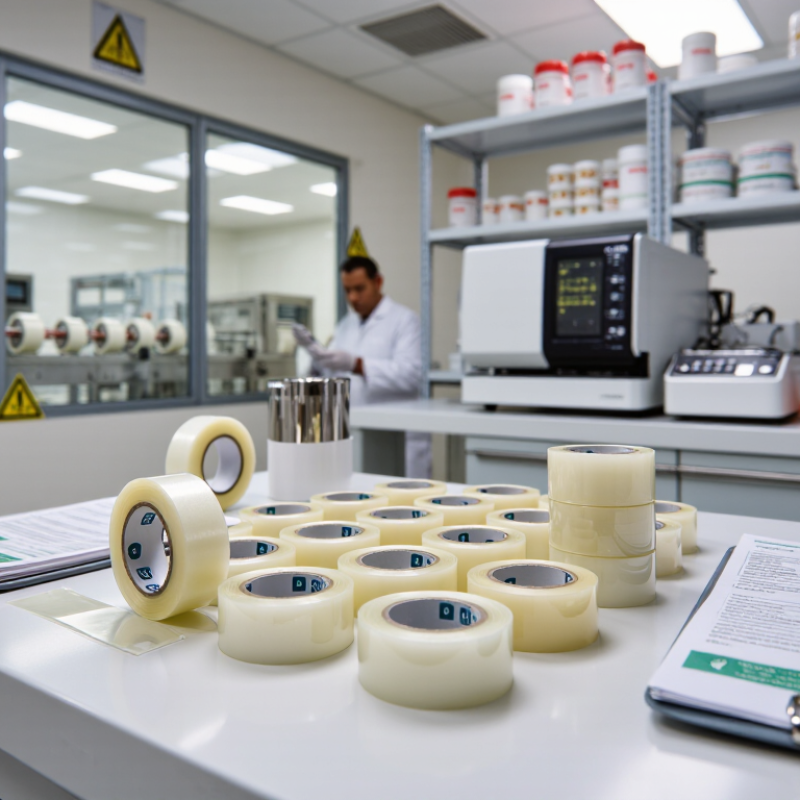
A medical grade tape certification is necessary because the tape may contact damaged skin, wounds, or sensitive tissue. China does not use one universal certificate for every tape product. Requirements depend on intended use, adhesive chemistry, packaging, sterilization, and risk classification. A tape for fixing a dressing may face different controls from a tape used during surgery.
Manufacturers commonly prepare technical documentation, product testing reports, and quality management evidence. Relevant checks can include cytotoxicity, skin irritation, sensitization, microbial limits, peel strength, and aging performance. Chemical safety also matters. Residual solvents and adhesive migration should be evaluated carefully. For market access, registration or filing with the appropriate Chinese authority may apply. Chinese standards and recognized international systems, such as ISO 13485, can support this process, but they do not automatically replace local requirements.
Certification is more than paperwork. It connects laboratory evidence with patient safety, traceability, and consistent production. A reliable file should identify raw materials, production controls, batch records, and storage conditions. Packaging claims need proof too.
“Hypoallergenic” is not a casual phrase. It requires meaningful evidence. A common mistake is treating a general adhesive test as complete medical validation. It is not.
Requirements can also change as product claims change. That uncertainty deserves review, even when the tape appears simple.
Medical adhesive tape compliance in China depends on its intended use, not a universal list of ten certificates. A tape for wound fixation may follow a different pathway from tape used with invasive devices. Manufacturers must confirm whether the product requires NMPA filing or registration. Classification, risk level, and intended clinical application are decisive. Relevant Chinese standards may include YY/T standards for adhesive products, biological evaluation requirements, and applicable medical device quality management rules. ISO 10993 data can support safety assessment, but it does not automatically replace Chinese regulatory obligations.
Technical evidence should cover adhesion, peel strength, residue, breathability, aging, packaging integrity, and skin compatibility. Testing should reflect real use, including sweating, movement, and repeated removal. Chinese labeling must clearly state intended use, materials, warnings, storage conditions, and shelf life. Sterile products require additional validation and controlled packaging. A common mistake is treating every medical tape as identical. That assumption fails in practice. The exact pathway may also change after formula, backing material, or claim revisions. Regulatory review is not merely paperwork.
Tips: Prepare a Chinese technical file early. Keep test methods consistent with production batches. Verify classification with qualified local professionals before manufacturing. Do not advertise clinical performance without supporting evidence. Small details matter, especially adhesive residue and package sealing. Even experienced teams can overlook them.
Medical-grade tape buyers usually request more than one certificate. A practical compliance package should include an ISO 13485 quality-management certificate, an ISO 14971 risk-management file, and an ISO 10993 biocompatibility report. China-bound products may also need NMPA registration or filing, depending on intended use and classification. GB/T 16886 test evidence can support local review. For European distribution, prepare EU MDR technical documentation and a Declaration of Conformity. For the United States, confirm whether FDA 510(k) clearance, an exemption assessment, or another pathway applies.
The remaining documents address production risks. Include sterilization validation under ISO 11135 or ISO 11137, when the tape is supplied sterile. Add packaging validation under ISO 11607, especially for peel pouches and long storage periods. Adhesion, peel, and shear test reports should follow suitable ASTM or ISO methods. A chemical composition statement and Safety Data Sheet help reviewers assess residues, adhesives, and workplace handling. These ten documents form a stronger file than a single “medical grade” claim.
The ISO Survey 2023 recorded 38,517 ISO 13485 certificates worldwide, showing how widely quality systems are used in medical-device supply chains. Yet certification alone does not prove clinical safety. Details matter. A weak sampling plan, unclear aging data, or missing lot traceability can still delay approval. I would not treat a complete checklist as perfect evidence. Intended use, skin-contact duration, sterilization method, and adhesive chemistry must remain connected throughout the technical file.
Medical tape certification starts with the target market, not the test laboratory. Manufacturers should identify whether the tape is a medical device, define its intended use, and confirm its risk class. Requirements may differ for wound dressing, fixation, or surgical applications. Document this decision clearly.
Build a quality system aligned with ISO 13485. Assign responsibilities, control suppliers, and record every production change.
Create a risk file using ISO 14971 principles. Test the adhesive, backing, liner, skin contact, and package integrity. Biocompatibility testing may follow ISO 10993, depending on contact type and duration.
Sterile products need validated sterilization and packaging processes. Keep samples from each production batch.
Prepare the technical file with drawings, specifications, test reports, labels, clinical evidence, and shelf-life data. An independent auditor may inspect clean areas, calibration records, training files, and complaint handling. Correct findings with documented root-cause analysis. Then submit the required application to the relevant authority or conformity assessment body.
Do not confuse ISO certification with product approval. They support different claims. In practice, manufacturers often underestimate adhesive aging and humidity effects. A tape may pass initial tests yet fail after storage.
Rechecking assumptions is necessary. Records must match the actual factory floor. Even a small change in coating weight can require fresh risk review, testing, or regulatory notification.
China Top 10 Medical Grade Tape Certifications Required?
“Medical grade” is not, by itself, a legal certification. Before entering the Chinese market, confirm the tape’s intended use, risk class, and product claims. Depending on those details, documents may include NMPA registration or filing, ISO 13485 certification, biocompatibility testing, sterilization validation, and relevant national or international test reports. Do not assume every certificate is mandatory. Dates matter.
Request a complete certificate copy, not a cropped image. Check the certificate number through the issuing authority’s official database. The legal manufacturer, production site, product model, and material description must match your shipment. Compare the certificate scope with the tape’s actual use, adhesive type, backing, width, and packaging. A certificate for general adhesive materials may not cover skin-contact medical tape. Small differences can create large compliance problems.
Review the issuing body’s accreditation and certification scope. Testing laboratories should hold suitable competence accreditation, while certification bodies should be authorized for the stated activity. Verify expiry dates, suspension records, translated documents, and the link between test reports and production samples. Ask whether the report covers the current formulation or an older sample. That question is often missed. Keep an evidence folder with screenshots, database records, original reports, and supplier declarations. A QR code is helpful, but it is not proof alone. When evidence conflicts, pause the launch and obtain written clarification from the relevant authority or qualified regulatory specialist. Mistakes happen, and a confident supplier answer may still be incomplete.
These standards and regulatory documents are commonly reviewed for medical-grade adhesive tapes, but none is universally mandatory for every product or market. Applicability depends on intended use, skin contact, sterility, risk classification, and local regulations. Before entry, verify the certificate scope, covered product or site, issuing body, accreditation status, certificate number, issue date, expiry date, and current status directly with the relevant certification or regulatory authority.
The tape may touch damaged skin, wounds, or sensitive tissue. Certification supports safety, traceability, and consistent production. Paperwork alone is insufficient.
No. Requirements depend on intended use, adhesive chemistry, packaging, sterilization, and risk classification. Fixing a dressing differs from surgical use.
Testing may cover skin irritation, sensitization, cytotoxicity, microbial limits, peel strength, and aging performance. Chemical safety also matters. Small details matter.
No. It is a product description, not automatic legal approval. Confirm the intended use, risk class, claims, and applicable filing or registration requirements.
Request complete certificates, test reports, quality records, product specifications, and supplier declarations. Review raw materials, production controls, batch records, and storage conditions.
Obtain the full certificate, not a cropped image. Check its number through the issuing authority’s official database. Verify dates, scope, suspension records, and translations.
The legal manufacturer, production site, model, material, width, adhesive, backing, and packaging should match. A small mismatch can create a serious compliance problem.
Usually, no. The test may cover a different material or use. Compare the report with the current formulation and actual production sample.
No. A QR code is only a helpful reference. Confirm the database record, issuing body, accreditation, expiry date, and document scope.
Pause the launch and request written clarification from the relevant authority or a qualified specialist. Supplier confidence is not complete evidence. Mistakes happen.
Medical-grade tape products used in China must meet safety, quality, performance, and traceability requirements before entering the market. The question “What certifications are required for medical-grade tape products” depends on the product’s intended use, risk classification, adhesive composition, contact duration, and whether it is manufactured domestically or imported. Key compliance materials may include a medical device registration or filing, quality management system certification, product technical requirements, testing reports, manufacturing authorization, and documentation for biocompatibility, sterility, packaging, labeling, and chemical safety.
The certification process normally begins with product classification and regulatory consultation, followed by technical documentation, laboratory testing, quality system review, registration or filing, and post-market record management. Manufacturers should verify certificate numbers, issuing authorities, validity periods, product specifications, manufacturing locations, and consistency between certificates and packaging labels. A careful document review, supported by authorized regulatory channels and current Chinese standards, can help confirm authenticity and reduce delays, compliance risks, and market-entry problems.
